Roof Leak Water Damage in Beaverton, OR
Wind-driven rain, moss and clogged valleys push water past shingles and flashing. The drying team finds how far it traveled through the attic and dries ceilings and wall cavities to standard.
(888) 373-8814Speak with 24/7 Beaverton dispatch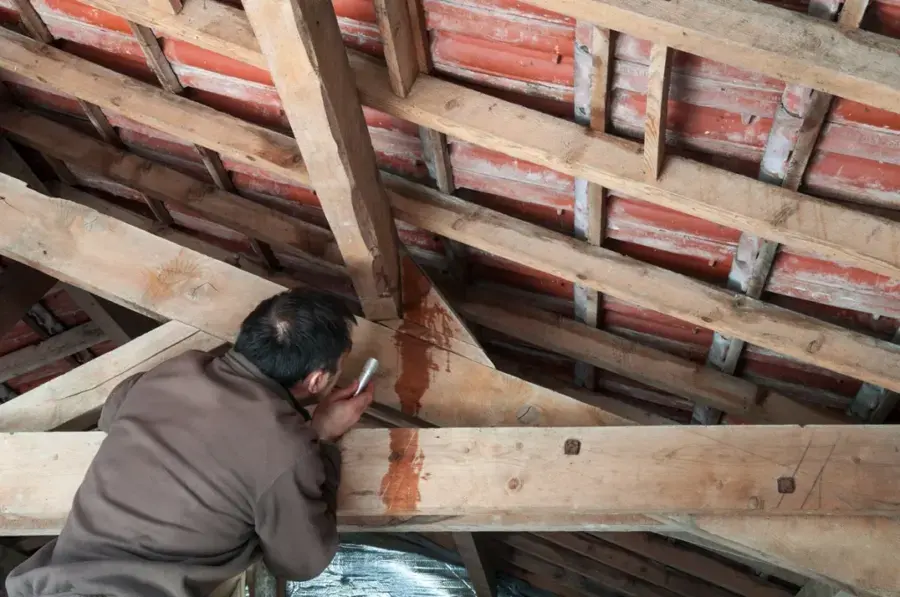
What to do the moment you find a roof leak
- Catch the water
Put buckets or towels under drips and move furniture away.
- Keep clear of sagging ceilings
A water-filled ceiling can drop without warning.
- Photograph the stains
Photos of ceilings and the attic help the claim file.
- Call for drying
Wet attic insulation keeps dripping long after the rain stops.
The trade facts
How a roof leak is handled in Beaverton
The order of the work is what separates a finished dry-out from a cosmetic one.
- 1
Walkthrough and moisture map
The tech who does the walkthrough maps moisture with pinless meters and thermal imaging before any equipment goes down.
- 2
Extraction
The extraction crew pulls standing water with truck-mounted extraction, so the water leaves the building instead of moving to the next room.
- 3
Air movers and LGR dehumidifiers
The drying team sets air movers to each room's evaporation load and runs LGR dehumidifiers, or desiccants for Class 4 materials.
- 4
Daily readings to the drying goal
Most crews log readings daily and pull equipment once wet material sits within 2 to 4 points of a dry reference material.
Rapid local response
The response team answers around the clock and treats active water as an emergency, because every hour of wicking adds drying time.
IICRC S500 drying standard
IICRC S500 is the industry drying standard. Crews map moisture first and pull equipment only when the readings say dry.
Claim-ready documentation
Daily moisture readings, a moisture map and timestamped photos before any demolition: the file an adjuster reads.
Tualatin Valley water experts
Crawlspaces, clay soil, creek flooding and eight wet months: the local pros know how water moves in a Beaverton house.
What does roof leak water damage cost in Beaverton, OR?
In Beaverton, OR, roof leak water damage restoration typically runs $1,000 to $7,000 or more, not counting the roof repair itself. The drivers are how much attic insulation is wet, how many ceilings and walls the water reached, the material class, and how fast drying started.
One ceiling area
- Thermal imaging trace
- Spot insulation removal
- Ceiling drying
Several rooms
- Attic insulation removal
- Ceiling drywall removal
- Wall cavity drying
Long-running leak
- Wet framing and top plates
- Extended drying
- Full documentation
These are typical ranges, not a quote. Get a closer planning number with the water damage cost calculator; the restoration contractor who responds scopes the real job on site.
A roof leak in Beaverton rarely shows up where the water got in. Rain slips past a lifted shingle, a cracked pipe boot or a moss-choked valley, runs along a rafter, soaks the attic insulation and finally stains a ceiling two rooms away. By the time the stain shows, the insulation and top plates above it have often been wet for a while.
What drives roof leaks here
- Long wet seasons that let moss build up and hold water on the roof
- Gutters and valleys clogged with fir needles and leaves
- Wind-driven rain in winter storms, pushing water sideways under flashing
- Aging composition roofs on 1970s and 1980s homes
How roof leak damage is dried
- The tech who does the walkthrough traces the water path with thermal imaging and pinless meters
- The mitigation team pulls soaked attic insulation and any sagging ceiling drywall
- The drying team dries rafters, top plates and wall cavities with air movers and dehumidifiers
- A roofer handles the roof repair, and a tarp goes on first if rain is still coming
Roof leaks are different from ceiling leaks caused by plumbing. If the water is coming from an upstairs bathroom or a supply line instead, see ceiling leak water damage.
Ceiling dripping during a storm? Put a bucket under it, move valuables, and call.
Call (888) 373-8814 for the Beaverton lineBefore the next storm
Cleaning gutters and valleys before October and checking pipe boots and flashing does more than most repairs. The National Weather Service Portland office issues wind and heavy rain alerts ahead of the big storms, and Ready.gov has storm preparation checklists.
A bulging ceiling is a warning
If a ceiling is sagging with trapped water, keep people out from under it and away from light fixtures in that area. Put a bucket and a tarp below it and call.
Roof Leak Water Damage across Beaverton
The Beaverton water damage pros take calls from every Beaverton ZIP and the neighboring Washington County towns, day or night.
Coverage runs across Beaverton, Aloha, Cedar Mill, Bethany, Tigard, Hillsboro, Tualatin and the west side of Portland, ZIP codes 97003, 97005, 97006, 97007, 97008 and the Beaverton PO box ZIPs.
The restoration team asks for the cross street and which level of the house is wet, because that decides what goes on the truck.
See every neighborhood and ZIP coveredRoof Leak Water Damage questions
How do I know if my attic is wet?
Look for water stains on the ceiling, a musty attic smell, dark spots on the underside of the roof sheathing, or insulation that looks matted. Thermal imaging and a moisture meter confirm how far it spread.
Should I fix the roof or dry the house first?
Both, in order: stop the water with a tarp or a temporary repair, then dry. Drying while rain still gets in wastes time. The roofer handles the roof, and the drying team handles the attic, ceilings and walls.
Does wet attic insulation need to be replaced?
Blown-in or batt insulation that is soaked usually comes out, because it holds water against the ceiling and dries slowly. Damp edges can sometimes dry in place.
Is roof leak damage covered by insurance?
Sudden storm damage is often treated differently from a slow leak caused by wear. Coverage depends on your policy, so it is worth checking with your own insurer. Photos and readings help either way.
Why did the stain appear far from the leak?
Water runs along rafters and across the top of the insulation before it finds a way down, so the stain can show up several feet from where the rain got in.
How long does a ceiling take to dry?
A ceiling wet from a short leak usually dries in two to four days with airflow and dehumidification. Soaked insulation and framing above it can take longer.
Related water damage services in Beaverton
Roof Leak Water Damage in Beaverton? Call now.
Wet material keeps wicking until someone dries it. The Beaverton water damage pros answer day or night and start with extraction and a moisture map.