About Water Damage Beaverton 24/7
24/7 water damage restoration for Beaverton and the Tualatin Valley, from the restoration team that does the work.
The restoration team for Beaverton water emergencies
Water Damage Beaverton 24/7 exists to help a Beaverton homeowner or business owner make good decisions in the first hours of a water loss. The restoration team explains how the water damage trade works, what a proper dry-out looks like, and what a claim file should contain.
Water Damage Beaverton 24/7 does not perform the restoration work itself. A call reaches a restoration company that serves Beaverton, and that company identifies itself, scopes the job and does the work.
The focus is local: crawlspaces under 1960s to 1980s homes, daylight basements on Murray Hill and Sexton Mountain, creek flooding along Beaverton, Fanno and Cedar Mill creeks, and the ice storms that split pipes every few winters.
Find us on Google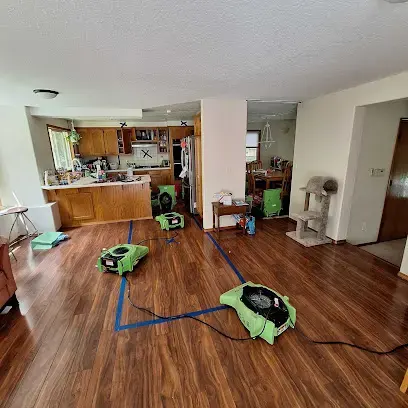
How a Beaverton dry-out is held to a standard
These are statements about the trade standard, not credentials. Ask the restoration contractor who responds how each one is handled on the job.
- 1
Walkthrough and moisture map
The tech who does the walkthrough maps moisture with pinless meters and thermal imaging before any equipment goes down.
- 2
Extraction
The extraction crew pulls standing water with truck-mounted extraction, so the water leaves the building instead of moving to the next room.
- 3
Air movers and LGR dehumidifiers
The drying team sets air movers to each room's evaporation load and runs LGR dehumidifiers, or desiccants for Class 4 materials.
- 4
Daily readings to the drying goal
Most crews log readings daily and pull equipment once wet material sits within 2 to 4 points of a dry reference material.
What a good water damage response looks like
The restoration team should ask about the source, the category of water and which levels are wet. The crew that follows should map moisture before setting equipment and leave it running until the readings say dry.
Rapid local response
The response team answers around the clock and treats active water as an emergency, because every hour of wicking adds drying time.
IICRC S500 drying standard
IICRC S500 is the industry drying standard. Crews map moisture first and pull equipment only when the readings say dry.
Claim-ready documentation
Daily moisture readings, a moisture map and timestamped photos before any demolition: the file an adjuster reads.
Tualatin Valley water experts
Crawlspaces, clay soil, creek flooding and eight wet months: the local pros know how water moves in a Beaverton house.
Talk to someone about the water now.
Wet material keeps wicking until someone dries it. The Beaverton water damage pros answer day or night and start with extraction and a moisture map.