Basement Flooding Cleanup in Beaverton, OR
Hillside homes on Murray Hill, Sexton Mountain and Cooper Mountain often have daylight basements that catch runoff. The drying team pumps the water, opens what is wet and dries the space to a verified reading.
(888) 373-8814Speak with 24/7 Beaverton dispatch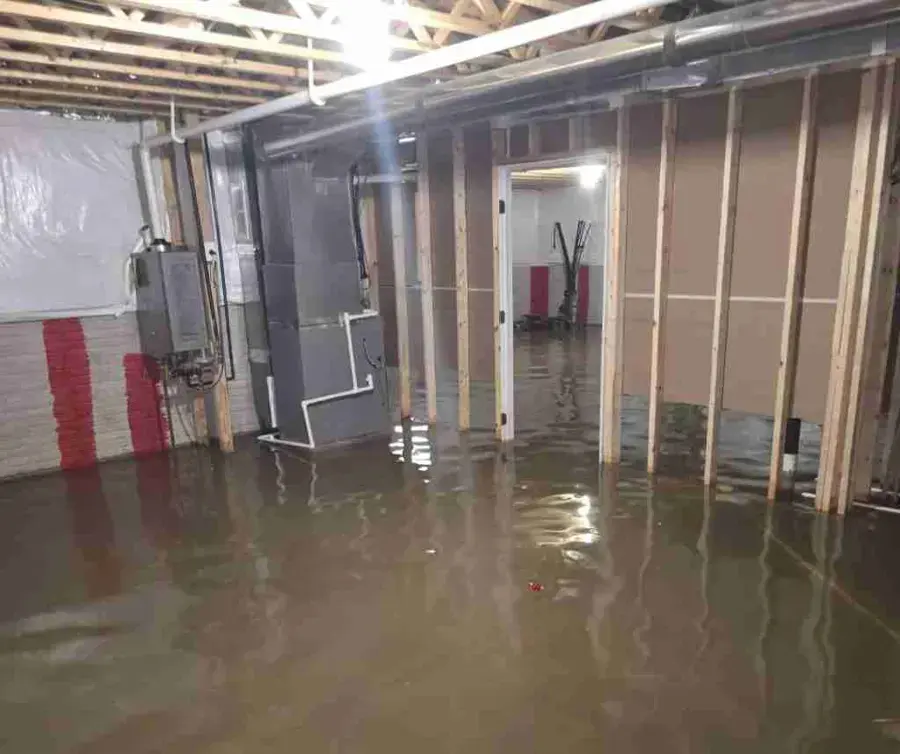
What to do the moment you find a flooded basement
- Stay out of live water
Do not wade in if outlets, cords or appliances sit in the water.
- Cut power safely
Shut off the basement circuits only from a dry panel.
- Move what you can
Lift boxes, rugs and electronics to higher ground if it is safe.
- Call and describe the source
Runoff, groundwater or a pipe each changes the plan.
The trade facts
How a flooded basement is handled in Beaverton
The order of the work is what separates a finished dry-out from a cosmetic one.
- 1
Walkthrough and moisture map
The tech who does the walkthrough maps moisture with pinless meters and thermal imaging before any equipment goes down.
- 2
Extraction
The extraction crew pulls standing water with truck-mounted extraction, so the water leaves the building instead of moving to the next room.
- 3
Air movers and LGR dehumidifiers
The drying team sets air movers to each room's evaporation load and runs LGR dehumidifiers, or desiccants for Class 4 materials.
- 4
Daily readings to the drying goal
Most crews log readings daily and pull equipment once wet material sits within 2 to 4 points of a dry reference material.
Rapid local response
The response team answers around the clock and treats active water as an emergency, because every hour of wicking adds drying time.
IICRC S500 drying standard
IICRC S500 is the industry drying standard. Crews map moisture first and pull equipment only when the readings say dry.
Claim-ready documentation
Daily moisture readings, a moisture map and timestamped photos before any demolition: the file an adjuster reads.
Tualatin Valley water experts
Crawlspaces, clay soil, creek flooding and eight wet months: the local pros know how water moves in a Beaverton house.
What does basement flooding cleanup cost in Beaverton, OR?
In Beaverton, OR, basement flooding cleanup typically runs $1,500 to $12,000 or more. The drivers are the category of water, the square footage of the basement, whether it is finished, and how fast drying started.
Unfinished, clean water
- Pumping and extraction
- Slab and wall drying
- Daily readings
Finished basement
- Carpet pad and baseboard removal
- Flood cuts on saturated drywall
- LGR dehumidifiers
Contaminated or deep water
- Category 3 or floodwater
- Containment and antimicrobial
- Full structural drying
These are typical ranges, not a quote. Get a closer planning number with the water damage cost calculator; the restoration contractor who responds scopes the real job on site.
Full basements are less common in Beaverton than crawlspaces, but daylight basements on sloped lots and partial basements in older split-levels are everywhere. When an atmospheric-river storm dumps several inches on already saturated ground, runoff and groundwater push against the uphill wall and find the joint where the slab meets the foundation.
Where basement water comes from here
- Surface runoff from the uphill side of a sloped lot
- Groundwater rising through the slab or the slab edge
- A failed sump or drain pump
- Plumbing inside the basement: a water heater, a washer line or a burst pipe
The source sets the category. Clean water from a supply line is Category 1, groundwater is usually Category 2, and a backed-up floor drain or sewer line is Category 3, which changes what gets removed.
How a flooded basement is handled
- The response team confirms power to the basement is off at a dry panel before anyone walks in
- The extraction crew pumps and extracts standing water, starting at the low side
- The mitigation team removes wet carpet pad, baseboards and the bottom of saturated drywall where readings call for it
- The drying team runs air movers and LGR dehumidifiers until readings hit the drying goal
Water on the basement floor and still coming in? Stay out if outlets or cords are in the water, then call.
Call (888) 373-8814 for the Beaverton lineAfter the storm
Once the basement is dry, the source still needs attention: grading, gutters and downspouts on the uphill side, and a working pump if the basement has one. FEMA's FloodSmart site explains how flood coverage differs from a homeowners policy, and Ready.gov covers electrical safety in flooded spaces. See sump pump failure cleanup if a pump quit.
Mind the furnace and water heater
Many Beaverton basements hold the furnace and water heater. If water reached their controls or burners, have them checked before turning them back on.
Basement Flooding Cleanup across Beaverton
The Beaverton water damage pros take calls from every Beaverton ZIP and the neighboring Washington County towns, day or night.
Coverage runs across Beaverton, Aloha, Cedar Mill, Bethany, Tigard, Hillsboro, Tualatin and the west side of Portland, ZIP codes 97003, 97005, 97006, 97007, 97008 and the Beaverton PO box ZIPs.
The restoration team asks for the cross street and which level of the house is wet, because that decides what goes on the truck.
See every neighborhood and ZIP coveredBasement Flooding Cleanup questions
Why does my daylight basement flood in heavy rain?
On a sloped lot the uphill wall holds back soil that fills with water in a long storm. Runoff and groundwater press on that wall and find the joint where the slab meets the foundation. Gutters that overflow on the uphill side make it worse.
Can a finished basement be saved?
Often much of it. Drywall wet with clean water can be dried in place when extraction starts fast. Carpet pad usually comes out, and anything touched by Category 3 water gets removed. The tech who does the walkthrough decides with meter readings.
What is a flood cut?
A flood cut removes the bottom of wet drywall, usually a foot or two above the water line, so the wall cavity can dry and the insulation behind it can come out. It saves the rest of the wall.
Is basement flooding covered by homeowners insurance?
It depends on the source. A burst pipe inside the house is treated differently from surface water or groundwater, which usually falls under flood coverage. Coverage depends on your policy, so it is worth checking with your own insurer.
How long does a basement take to dry?
A clean-water basement usually dries in three to five days after extraction. Concrete, plaster and a wet-season basement take longer. Crews pull equipment when readings reach the drying goal, not on a set date.
Should I pump the water out myself?
Only if the power is off and the water is clean. Pumping a basement out too fast while the ground outside is saturated can stress the walls, and contaminated water needs protective gear. When in doubt, call.
Related water damage services in Beaverton
Basement Flooding Cleanup in Beaverton? Call now.
Wet material keeps wicking until someone dries it. The Beaverton water damage pros answer day or night and start with extraction and a moisture map.